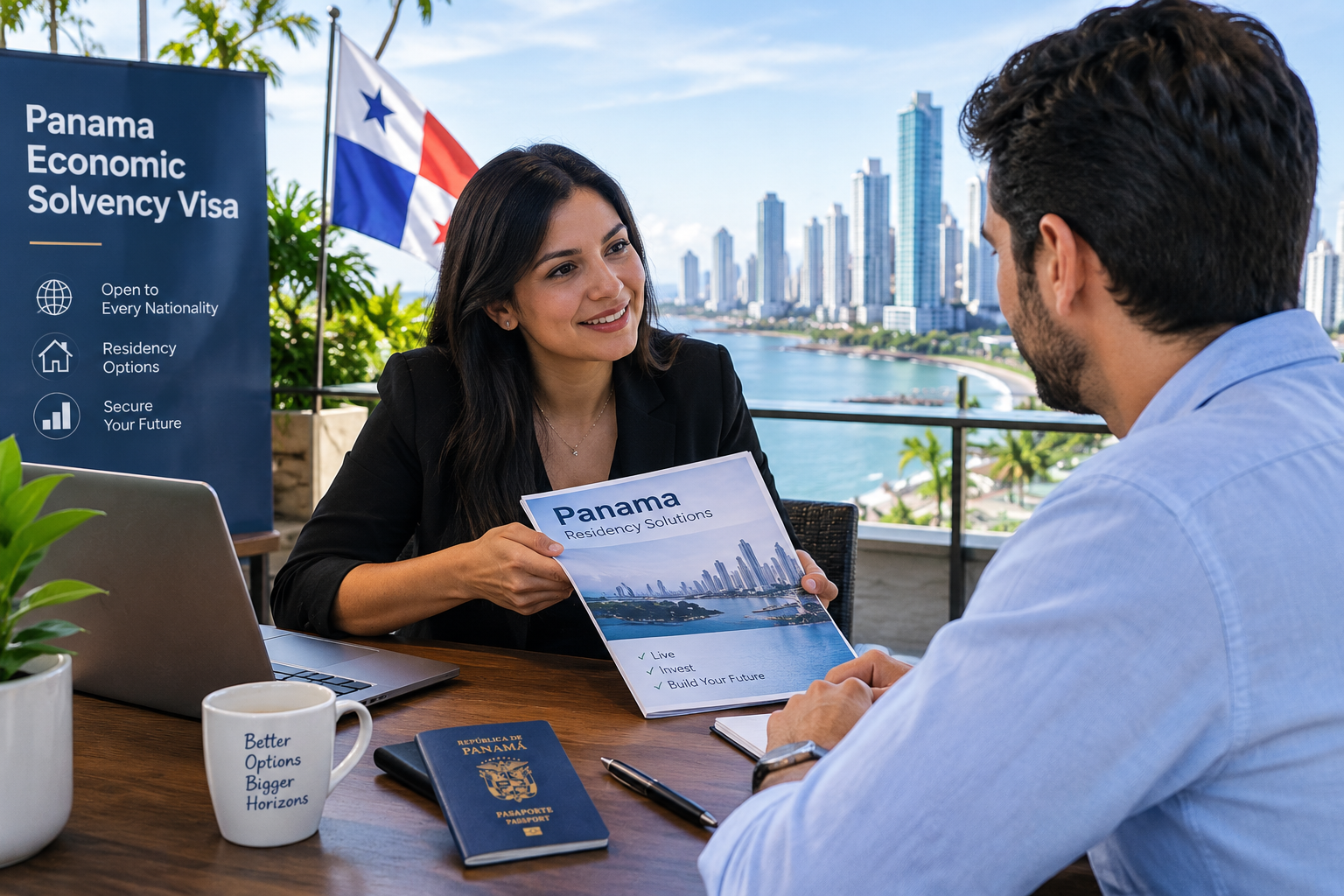
Panama Economic Solvency Visa
One of the most frequent questions we receive at INGWE Investment & Migration from clients interested in investing and/or living in Panama is: “I want to live in Panama, but my country isn’t on the Friendly Nations list; what are my options?” Most applicants in this position assume their only alternative is the Qualified Investor Visa, with its considerably higher investment thresholds and longer lock-in requirements. What almost nobody tells them, including, remarkably, many Panamanian immigration lawyers, is that there is a third option. One that has been sitting quietly on the books since 2016, largely forgotten since the Qualified Investor Visa launched, and in our professional view, significantly underutilized. It is the Panama Economic Solvency Visa, formerly known as the Self-Economic Solvency Visa, and it may be exactly what you are looking for.
Understanding the Landscape: Three Roads to Panama Residency
For non-retiree applicants exploring Panama Residency by Investment, three programs dominate the conversation. Understanding how they relate to one another is essential before making any decisions.
The Friendly Nations Visa is the most widely discussed program and, for eligible nationals, often the most attractive entry point. It requires a minimum investment of USD $200,000 in either real estate or a fixed-term bank deposit, with a three-year hold period before the investment can be liquidated without affecting residency status. The government fee for the main applicant is USD $1,050 (composed of USD $250 payable to the National Treasury and USD $800 to the National Immigration Service). The same USD $1,050 applies per dependent over 12 years of age; dependents under 12 pay USD $250 only. Critically, however, this program is restricted to citizens of approximately 50 approved nationalities.
The current list of eligible Friendly Nations includes:
Andorra, Argentina, Australia, Austria, Belgium, Brazil, Bulgaria, Canada, Chile, Costa Rica, Croatia, Cyprus, Czech Republic, Denmark, Estonia, Finland, France, Germany, Greece, Hong Kong, Hungary, Ireland, Israel, Japan, Latvia, Liechtenstein, Lithuania, Luxembourg, Malta, Mexico, Monaco, Montenegro, Netherlands, New Zealand, Norway, Paraguay, Poland, Portugal, Romania, San Marino, Serbia, Singapore, Slovakia, Slovenia, South Africa, South Korea, Spain, Sweden, Switzerland, Taiwan, United Kingdom, United States, Uruguay.
Note: Italian nationals are not on this list because Italy holds a separate bilateral Treaty of Friendship with Panama, which creates its own distinct pathway.
The Panama Qualified Investor Visa is open to all nationalities and offers the significant advantage of immediate permanent residency, bypassing the two-year provisional period entirely. However, this comes at a substantially higher cost. Investment thresholds are USD $300,000 in real estate (currently, with this threshold reverting to USD $500,000 after October 2026 unless extended) or USD $750,000 in a fixed-term bank deposit, with a five-year mandatory hold period on either option. Government fees are USD $10,000 for the main applicant, USD $2,000 per dependent aged 12 or over, and USD $1,000 per dependent under 12.
For the investor who does not hold a qualifying Friendly Nations passport and finds the Qualified Investor Visa too costly or too restrictive in its hold requirements, the conventional narrative stops here. But it shouldn’t — because there is a third path that most advisors never mention.
The Program Nobody Talks About: The Self-Economic Solvency Visa
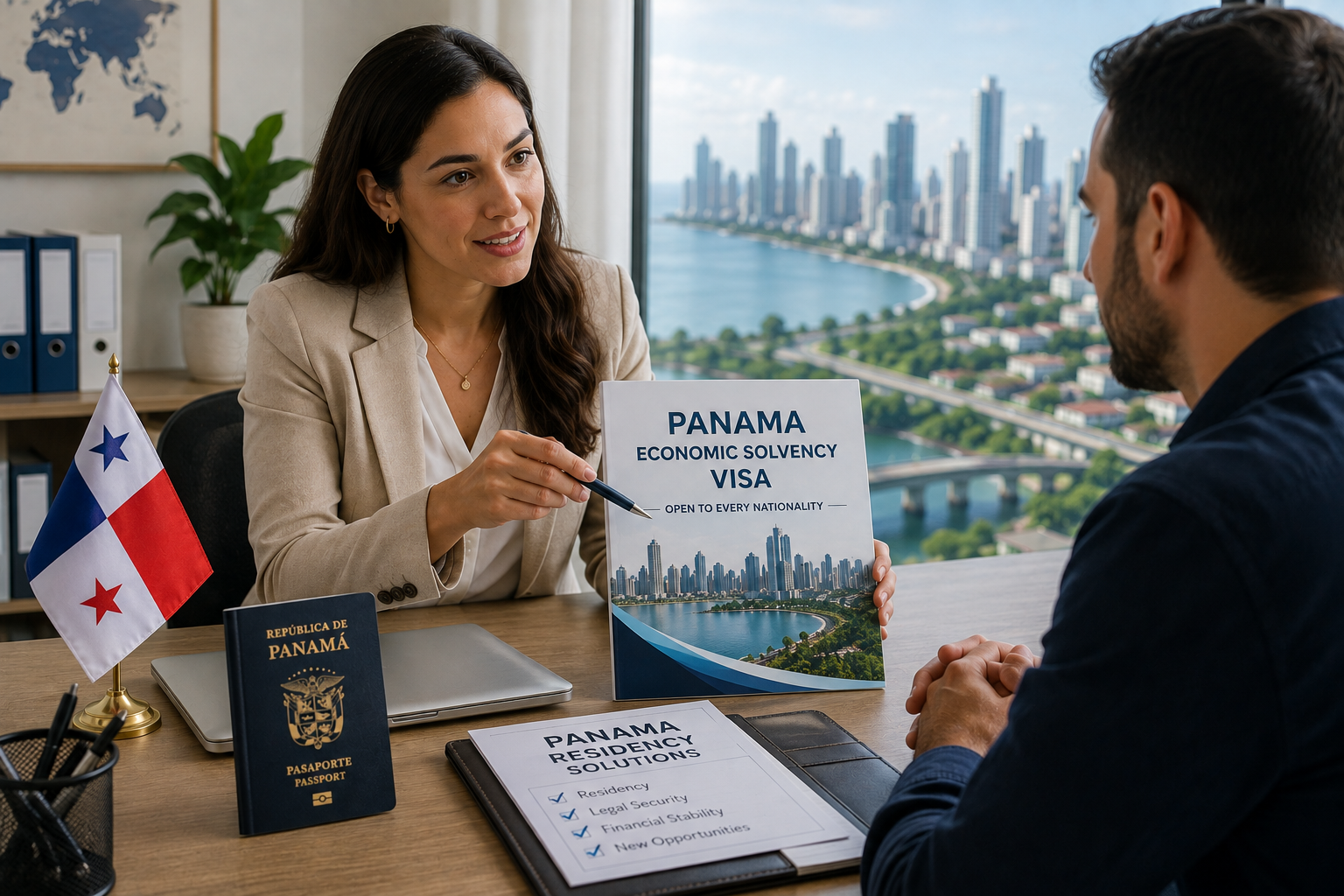
The Panama Economic Solvency Visa, formally known as the Visa de Solvencia Económica Propia, was established by Executive Decree Law No. 3 of 2008. It is available to foreign nationals of any nationality without restriction, operates on a USD $300,000 minimum investment threshold, and functions almost identically to the Friendly Nations Visa in terms of process, timelines, and immigration outcomes.
We are candid with our clients about why this program rarely comes up in consultations: since the launch of the Qualified Investor Visa, it has been largely archived in the institutional memory of Panama’s immigration industry. Many law firms default to presenting applicants with a binary choice between the Friendly Nations Visa and the Qualified Investor Visa, leaving the Self-Economic Solvency Visa entirely off the table. At INGWE Investment & Migration, we believe informed applicants make better decisions, which is why we make it our business to surface programs like this one.
How the Self-Economic Solvency Visa Works
Under the Panama Economic Solvency Visa, the investment requirement is USD $300,000 total, and crucially, it can be structured as a combination of real estate and a certified fixed-term bank deposit in Panama. This flexibility is one of the program’s most practical advantages. An additional USD $2,000 of investment is required per dependent included in the application.
To illustrate how this flexibility works in practice:
- An applicant purchasing a USD $250,000 property can top up the remaining USD $50,000 with a certified time deposit in a Panamanian bank to reach the USD $300,000 threshold.
- An applicant who prefers not to invest in real estate can place the entire USD $300,000 in a certified fixed-term bank deposit — a significantly lower commitment than the USD $750,000 bank deposit required under the Qualified Investor Visa.
- All investments must be made as equity. Mortgage financing does not count toward the threshold, though if a property’s value exceeds USD $300,000, the amount above that threshold may be financed through a local Panamanian bank.
The investment must be maintained for three years — not five, as required by the Qualified Investor Visa. After the three-year mark, the applicant may liquidate all or part of their bank deposit or sell their real estate without any impact on their residency status or their pathway to citizenship. This shorter hold period, combined with the lower investment floor, represents a meaningfully different risk profile for the applicant.
The Application Process and What to Expect
For applicants considering the Panama Economic Solvency Visa, the application process will look familiar to anyone who has researched the Friendly Nations Visa. The application is submitted in person during a visit to Panama, and the applicant — or their legal representative armed with a power of attorney — files all required documentation with the Servicio Nacional de Migración.
After submission, immigration processing typically takes three to four months. The applicant may remain in Panama during this period or return to their home country and re-enter Panama when their temporary residency card is ready for collection. This temporary residency is valid for two years, after which the applicant can apply to convert it to permanent residency, provided they have maintained their investment and complied with all residency requirements.
Government fees are USD $1,050 per adult applicant (USD $250 payable to the National Treasury and USD $800 to the National Immigration Service). The same fee structure applies per dependent over 12 years of age. For dependents under 12, please contact our team at INGWE Investment & Migration for the current applicable fee, as this is subject to verification with Panamanian immigration authorities.
The process requires two trips to Panama: the first to submit the application, and the second to collect the temporary residency documents. A third trip will be required approximately two years later to apply for and receive permanent residency. Applicants who prefer to minimize travel should factor this into their planning.
How the Three Programs Compare
In practical terms, the Panama Economic Solvency Visa sits between the Friendly Nations and Qualified Investor routes by combining unrestricted nationality eligibility with a lower government-fee structure and shorter investment hold period. The table below provides a clear, side-by-side comparison of all three programs across the metrics that matter most to investors and their families:
| Criteria | Friendly Nations Visa | Self-Economic Solvency Visa | Qualified Investor Visa |
| Nationality Restriction | 50+ eligible nations only | All nationalities | All nationalities |
| Minimum Investment | USD $200,000 | USD $300,000 | USD $300,000 (real estate) / USD $750,000 (bank deposit) |
| Investment Hold Period | 3 years | 3 years | 5 years |
| Initial Residency Type | Temporary (2 years) | Temporary (2 years) | Immediate Permanent |
| Trips to Panama Required | 2 trips (+ 1 for PR) | 2 trips (+ 1 for PR) | Can apply from abroad |
| National ID (Cédula) | After PR (year 2) | After PR (year 2) | Upon approval |
| Govt. Fee (Main Applicant) | USD $1,050 | USD $1,050 | USD $10,000 |
| Govt. Fee (Dependent 12+) | USD $1,050 | USD $1,050 | USD $2,000 |
| Govt. Fee (Dependent <12) | USD $250 | USD $250 | USD $1,000 |
| Citizenship Eligibility | 5 years from PR | 5 years from PR | 5 years from PR |
The Citizenship Horizon: Why the Value Proposition Is Exceptional
Both the Self-Economic Solvency Visa and the Friendly Nations Visa share the same ultimate destination: Panamanian citizenship, eligible after five years of permanent residency. That citizenship comes with a Panamanian passport, visa-free or visa-on-arrival access to approximately 140 to 150 countries, full rights to live and work in Panama indefinitely, and the ability to pass citizenship on to your children.
What makes this citizenship pathway genuinely compelling — particularly for applicants currently weighing Panama against more aggressively marketed alternatives — is the total cost structure relative to what is received.
Caribbean Citizenship by Investment (CBI) programs offer the fastest route to a second passport — typically four to eight months with no residency requirement. The minimum donation thresholds now start at USD $200,000 per family of up to four (following the 2024 regional price harmonization across Dominica, Antigua, Grenada, St. Kitts, and St. Lucia). However, these are non-refundable donations. The money does not come back. Compared with these donation-based programs, the Panama Economic Solvency Visa offers a residency route based on a recoverable investment rather than a non-refundable contribution. Real estate investment options in the Caribbean generally start at USD $200,000 to $300,000, with mandatory resale hold periods of three to seven years. The passports provide strong visa-free access, but Caribbean CBI jurisdictions carry their own risks: increasing regulatory scrutiny from the European Union (which has signaled potential suspension of visa-free Schengen access for some CBI nationals), limited economic diversification, natural disaster exposure, and the absence of any meaningful economic or community ties beyond the paper investment.
European Golden Visa and residency programs carry dramatically higher price tags. Portugal’s program has been significantly curtailed, Greece’s real estate Golden Visa threshold has risen to EUR €800,000 in prime areas, and Malta’s citizenship program requires a combined investment and donation exceeding EUR €690,000. The timelines to citizenship in Europe range from five to fourteen years depending on the jurisdiction, and the compliance burden is considerably heavier.
Against this backdrop, the Panama Economic Solvency Visa offers something genuinely rare in the global residency and citizenship market: a recoverable investment, a transparent citizenship timeline, and a realistic total cost structure that puts a quality second citizenship within reach of a much broader range of applicants and families.
At USD $300,000 minimum — invested in real estate that can appreciate, or a bank deposit that earns interest — the applicant is not simply spending money on a document. They are deploying capital into a stable, dollarized economy with one of the lowest tax burdens in the Western Hemisphere, while simultaneously building toward full citizenship. Three years later, that capital can be freed. And five years after receiving permanent residency, Panamanian citizenship is within reach. The math is fundamentally different from the Caribbean donation model.
It is worth noting that Panamanian citizenship requires passing a basic Spanish language and civics examination and is subject to the discretionary approval of the President of the Republic of Panama. Applicants are encouraged to plan for Spanish language integration as part of their long-term residency journey.
A Balanced Assessment: Advantages and Trade-Offs
No program is without its trade-offs, and we present them transparently:
Advantages
- Open to all nationalities globally, with no country restrictions whatsoever.
- The USD $300,000 investment is recoverable after three years, unlike non-refundable Caribbean CBI donations.
- The investment can be flexibly structured as a combination of real estate and bank deposit.
- Lower government fees compared to the Qualified Investor Visa — USD $1,050 per adult versus USD $10,000.
- Clear, defined pathway to Panamanian citizenship and passport in five years from permanent residency.
- The Panama Territorial Tax System generally focuses Panamanian income taxation on Panama-source income, making the country’s tax framework an important consideration for internationally mobile investors.
- An upcoming new regulation is expected to be announced by the Panamanian government later in 2026, allowing only new property sales to qualify for the Qualified Investor Visa – meaning directly from the developer, not resale. However, applicants who do not qualify for the Friendly Nations Visa could still purchase resale properties under the Self-Economic Solvency Visa, as the new government announcement only affects the Qualified Investor Visa applicants. This gives more flexibility and investment opportunities for the Self-Economic Solvency Visa investors, especially since the resale market in Panama offers the highest value compared to brand new developments.
Points to Consider
- Initial residency is temporary, not permanent — unlike the Qualified Investor Visa, which grants immediate permanent residency.
- The national ID card (cédula) is only issued upon conversion to permanent residency, approximately two years after the initial application.
- Two trips to Panama are required for the initial process, with a third trip needed to apply for permanent residency.
- The higher investment threshold compared to the Friendly Nations Visa (USD $300,000 versus USD $200,000) reflects the trade-off for unrestricted nationality eligibility.
- No traveller passport is included in this program, unlike the Qualified Investor Visa program where applicants have this option.
The Right Program Exists — Most People Just Haven’t Been Told About It
The global mobility and residency industry has a tendency to amplify what is heavily marketed over what is genuinely optimal. The Panama Economic Solvency Visa is a strong example of a program that quietly delivers exceptional value, including a recoverable investment, no nationality restrictions, lower government fees than the Qualified Investor Visa, a three-year hold period instead of five years, and a clear path toward Panamanian citizenship. Despite these advantages, it still receives relatively little attention in mainstream immigration circles.
For applicants outside the Friendly Nations list who want a more accessible alternative, understanding the landscape of the Qualified Investor route, the Panama Economic Solvency Visa deserves serious consideration. For those weighing Panama against Caribbean CBI donations or European Golden Visa programs with far higher thresholds and non-recoverable costs, the calculus is even more compelling.
At INGWE Investment & Migration, uncovering programs like this one — and matching them precisely to the right client profile — is exactly what we do. If you are navigating your residency options in Panama and want a candid, expert assessment of which pathway is genuinely best suited to your nationality, investment capacity, and long-term goals, we would be glad to speak with you.
For more practical guides on Panama residency, investment pathways, and immigration options, watch our latest insights on YouTube.