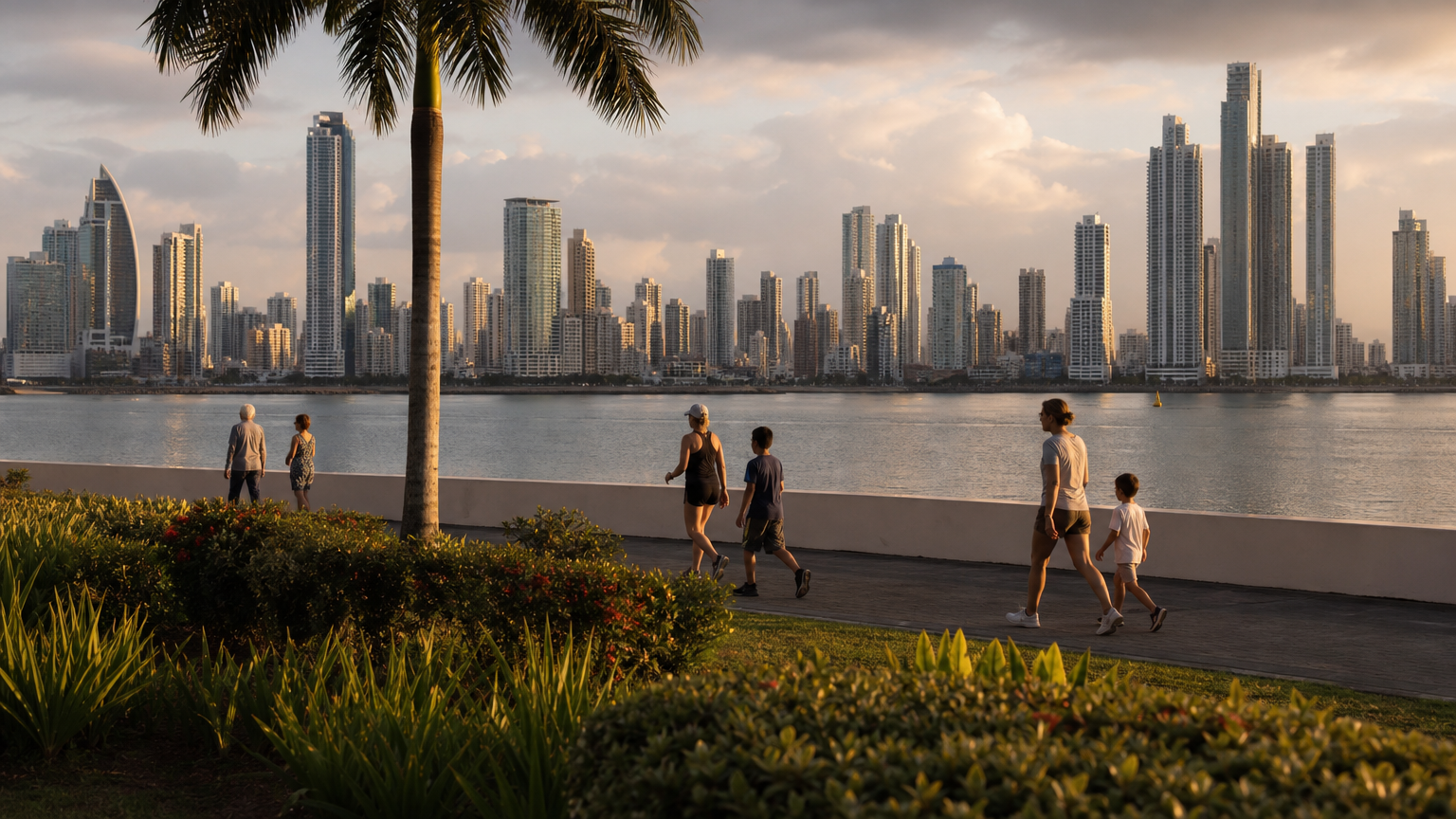
Buying property in Panama before retirement is a quiet shift in how Canadians and Americans are approaching their later years. Increasingly, Canadians and Americans in their late forties and fifties are no longer waiting until they collect their first pension cheque to consider where they will spend their retirement years. They are buying property in Panama before retirement, and using rental income, currency arbitrage, and tax structure to make that property work for them long before they ever move into it. At INGWE Investment & Mobility, we see this pattern across more of our pre-retirement clients each quarter. The strategy is not complicated, but it requires understanding several moving parts: how Panama City’s rental market generates income today, how Panama’s Pensionado program will receive you tomorrow, and how the gap between renting out and renting into the country can put real money in your pocket every month.
Understanding the Benefits of Buying Property in Panama Before Retirement
Many individuals are considering buying property in Panama before retirement due to various incentives and benefits associated with this approach.
Traditional retirement planning treats the destination decision as a problem to be solved after the working years end. You retire, you decide where to live, and only then do you start scouting properties, typically with the urgency of someone who needs a roof over their head within six to twelve months. The result is often rushed purchases at peak prices, with limited time to understand the local market, and zero years of rental income to offset the eventual move.
An increasing number of our clients are choosing to buy property in Panama before retirement, identifying attractive markets like Panama as their target retirement destination in their late forties or early fifties. They purchase a quality apartment in Panama City, typically in Costa del Este, San Francisco, Bella Vista, or Punta Pacifica, at today’s pricing. They rent it out for five to ten years while they continue working in North America. The rental income covers the property’s carrying costs and generates positive cash flow on top. When the time comes to retire, they either move into that very apartment, or they execute an arbitrage maneuver that puts even more money in their hands each month, which we will demonstrate concretely in this article.
This is not theoretical. It is the strategy that an entire cohort of pre-retirees is now executing, and Panama has emerged as their destination of choice for reasons that go well beyond beach photos and palm trees.
Why Panama Specifically, and Why Now
Panama occupies a unique position in the Western Hemisphere. It is the only major economy in the region that combines a fully dollarized currency, a territorial tax system, a stable banking sector, and direct flights of three to six hours from most major North American cities. It is the only country in Central America where the rule of law, infrastructure, and healthcare standards meet the expectations of a high-net-worth retiree from Ontario or California. And critically for the pre-retirement buyer, Panama imposes no restrictions on foreign property ownership, you can purchase freehold title in your own name without setting foot in the country.
Several structural advantages converge to make this moment particularly compelling:
- Territorial taxation. Panama taxes only income generated within its borders, which makes life considerably simpler once you have relocated. Pension income, dividends, investment income, and capital gains earned outside Panama are fully exempt from Panamanian income tax, regardless of whether your home country has a double taxation agreement with Panama. This is not a loophole. It is the structural foundation of Panama’s tax code.
- Dollarized economy. Panama uses the US dollar as legal tender. There is no Panamanian peso, no devaluation risk, and no currency exchange friction when American buyers transfer funds in. Canadian buyers face only their own CAD-to-USD conversion, which they would face on any US property purchase as well.
- Bank deposit returns. Time deposits in Panamanian banks of one year or longer routinely earn 5.2% or higher, substantially above what most retail savings products in Canada, the United States, or the United Kingdom currently offer. Interest earned on these deposits by foreign residents is also not subject to Panamanian income tax.
- Climate without compromise. Temperatures range from 28 to 32 degrees Celsius (82 to 90 degrees Fahrenheit) year-round, with cooler microclimates available in mountain towns like Boquete. No winters, no extreme weather emergencies, no shoveling driveways at sixty-five.
- Real estate growth cycle. Panama City has been in a sustained foreign investment growth cycle since 2022, with notable acceleration in 2024 driven by North American buyers shifting capital away from increasingly restrictive markets at home. Quality stock at attractive entry points still exists, but the window is narrowing.
- Easy future residency pathway. When you are ready to make the move permanent, Panama’s Pensionado program offers immediate permanent residency upon approval, typically within six months, with minimal documentation requirements and lifetime validity.
The Income Opportunity Before Retirement
Buying property in Panama before retirement offers a unique opportunity for future financial security and stability.
Quality apartments in Panama City’s most desirable neighborhoods are currently available across a price range that meets the budget of most North American pre-retirees. Entry points start at approximately US$220,000 for a one-bedroom unit in established expat-favored zones, and extend to US$450,000 for two-bedroom and three-bedroom apartments with ocean views, modern amenities, and premium finishes. The pricing in Panama City delivers substantially more square footage per dollar than a comparable apartment in Toronto, Miami, Vancouver, or New York, typically two to four times the space.
From an income perspective, the rental market in Panama City supports two distinct strategies, each suited to a different type of investor:
Long-term unfurnished rentals are the lower-effort, lower-yield option. A well-located two-bedroom apartment in Costa del Este, Santa Maria, Punta Pacifica, Punta Paitilla, Bella Vista, Hato Pintado, or Amador can be leased to a corporate tenant or local professional family for periods of one to two years, generating a net rental yield in the range of 6% per year after fees and expenses. Long-term leases require minimal day-to-day involvement and offer predictable cash flow.
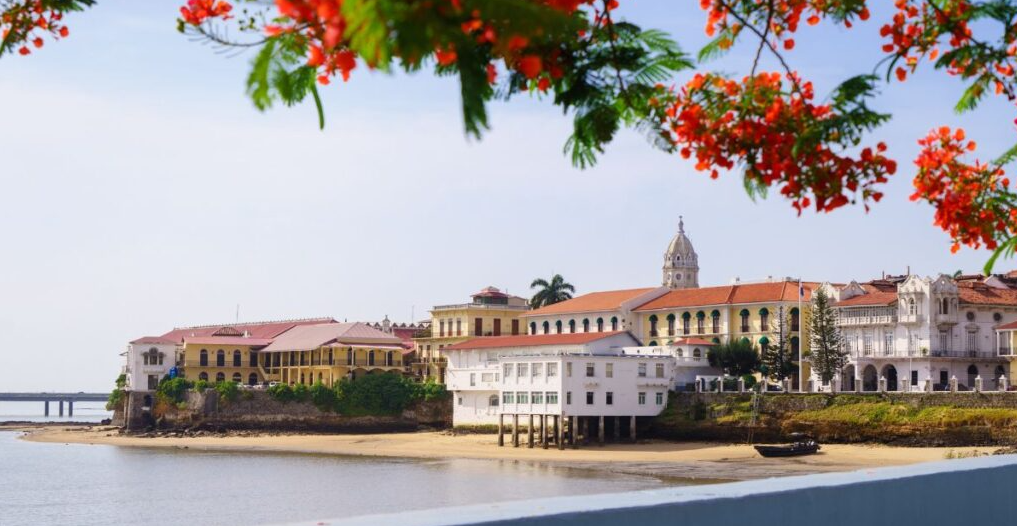
Short-term furnished rentals in buildings that are legally licensed for short-stay accommodation can materially outperform long-term yields. Properties in Costa del Este, San Francisco, Bella Vista, and Casco Viejo, the four neighborhoods most in demand from short-stay tourists, business travelers, and digital nomads, can generate net yields of 7.7% to 9% per year. The upper end of that range is achievable on lock-off two-bedroom units that can be marketed simultaneously as a full two-bedroom apartment, a one-bedroom apartment, or a separate studio. Engaging a professional property management company typically caps net returns at around 7.7%, while self-management can push that figure closer to 9.2%.
Many investors are interested in buying property in Panama before retirement to leverage the favorable rental yields.
For a pre-retiree still living and working in Canada or the United States, the practical choice is almost always the long-term unfurnished rental, as it is simpler, requires less oversight, and removes the headache of managing a short-term rental property from a different continent. At INGWE, we work with vetted Panamanian property management companies that handle tenant placement, monthly collections, repairs, and reporting, allowing the owner to remain genuinely passive.
The Arbitrage Strategy: Own in the City, Live by the Beach
Here is where the strategy of buying property in Panama before retirement becomes genuinely interesting, and where most generic retirement-in-Panama articles stop short.
The vast majority of Canadian and American retirees who actually settle in Panama do not, in practice, choose to live in downtown Panama City. They prefer the slower pace, lower cost, cooler climate (in some cases), and established expat communities found in Boquete (a mountain town in the Chiriquí Highlands), Coronado (a Pacific beach town about 80 minutes from the city), Nuevo Gorgona, El Valle de Antón, or Pedasí. These are the places where expat life genuinely happens, the supermarkets stock familiar brands, the medical clinics speak English, and the social fabric is built around fellow retirees.
This creates an extraordinary arbitrage opportunity. Panama City commands top dollar in rental rates because it is the financial, corporate, and commercial hub of the country, driving demand from professionals, executives, and short-stay visitors. Boquete and Coronado, despite being highly desirable for retirees, command significantly lower rental rates because demand comes from a different, slower-moving market segment. The result: you can own in the city, collect city rents, and rent in your retirement town for substantially less than your own property is generating.
The potential for growth in property value makes buying property in Panama before retirement a smart choice.
Consider this illustrative example, based on current market rental data:
Those buying property in Panama before retirement will benefit from the region’s growing real estate market and will take advantage of current market conditions.
| The Arbitrage Strategy in Numbers | Monthly Cash Flow (USD) |
| Long-term rental income from your Panama City property (Costa del Este, 2-bedroom) | + $2,400 |
| Less: HOA / condominium fees (avg. 75 m² @ $3.75/m²) | – $280 |
| Less: Property tax (annualized monthly) | – $75 |
| Less: Property management & maintenance reserve (~8%) | – $192 |
| Net rental income (city property) | + $1,853 |
| Less: Cost to rent furnished 2-bedroom home in Boquete or Coronado (retirement base) | – $1,000 |
| Net Monthly Arbitrage Surplus (additional passive income) | + $853 |
***Less estimated Panamanian income tax on rent: Progressive rates apply. Those buying property in Panama before retirement should be aware of the tax implications as well.***
The numbers above are based on a US$320,000 two-bedroom apartment in Costa del Este leased on a long-term unfurnished basis at US$2,400 per month, a realistic and achievable figure for that neighborhood today. The retirement base is a fully furnished two-bedroom home in Boquete or Coronado at approximately US$1,000 per month, also realistic, with options available below this price point for those willing to live slightly outside the most established expat zones.
The net result is approximately US$850 per month, or roughly US$700 after Panamanian income tax, of additional passive income, on top of your pension, your social security, and any other retirement income streams. This income comes from the spread between what the city pays you and what the beach town charges you, and it persists indefinitely. Critically, your underlying capital remains invested in Panama City real estate, which has been the more aggressive appreciation market of the two.
For the pre-retiree still working in North America, this arbitrage scenario represents the eventual destination state. The five to ten years between purchase and retirement are spent simply collecting net rental income (typically US$1,800 to US$2,200 per month net to the owner after all fees), banking it in either a Panamanian US dollar account earning above-market interest or repatriating it depending on tax structuring. Either way, the property is paying for itself, building equity, and appreciating in a market with strong fundamentals, all while you continue earning in your North American career.
The Tax Picture: A Word of Caution for Canadians and Americans
Buying property in Panama before retirement not only allows for rental income but also helps in tax planning.
Panama’s territorial tax system is genuinely powerful, but it is important to understand precisely what it does and does not do for North American buyers.
For Canadians, the key question is tax residency. While you remain a Canadian tax resident, the CRA taxes your worldwide income, so the Panama rent must be declared at home as well as in Panama. You won’t pay twice on the same dollar, as you may usually claim a foreign tax credit for Panamanian tax paid, subject to Canadian limitations.
The real shift comes when you relocate. Properly establishing non-resident status with the CRA when you move to Panama is a critical step, and one worth planning carefully with a cross-border accountant. Non-resident status removes Canadian tax on your Panama-sourced rental income going forward, though your Canadian pension income may still face Canadian withholding tax at non-resident rates. The benefit of Panama in this scenario is not the elimination of Canadian tax, it is the dramatic reduction in cost of living, allowing a given net pension income to support a substantially better lifestyle, and not being taxed again in Panama for the overseas pension income.
For Americans, the equation is different because the United States taxes its citizens on worldwide income regardless of where they live. Foreign earned income exclusions, foreign tax credits, and similar mechanisms can help, but they do not eliminate the US tax obligation on rental income or pension distributions. Americans considering this strategy should engage a tax professional familiar with the IRS reporting requirements for foreign rental property, including FBAR filings for any Panamanian bank account exceeding US$10,000 at any point during the year, and Form 8938 disclosures where applicable.
The best way to ensure a smooth transition is by buying property in Panama before retirement.
The goal of Panama as a retirement base, for both Canadians and Americans, is not to magically eliminate all tax obligations from your home country. That is a fantasy peddled by less reputable promoters of offshore strategies. The realistic goal is more pragmatic: combine a lower-cost living environment, a tax system that leaves your foreign income untouched, favorable banking returns, and a high quality of life to stretch your retirement income substantially further than it would go at home. Done correctly, the difference can be the equivalent of receiving a 30% to 50% raise on the day you retire, simply because your dollars do more in Panama than they do in Toronto, Calgary, Boston, or San Francisco.
At INGWE, we work closely with vetted cross-border investment & relocation advisors in both Canada and the United States to ensure our clients structure their pre-retirement purchases, eventual residency transition, and ongoing tax position correctly from the start.
The Pensionado Program: Your Future Pathway to Residency
When the time eventually comes to formalize your move to Panama, the Pensionado program (Permanent Resident Permit as a Retired or Pensioned Individual) is the natural and most efficient pathway. It is widely regarded as one of the most accommodating retiree residency programs anywhere in the world, and its key features deserve a high-level understanding even at the pre-retirement planning stage.
Understanding the Pensionado program is crucial if you are considering buying property in Panama before retirement.
The core eligibility threshold is straightforward: you must demonstrate a lifetime pension income of at least US$1,000 per month from a qualifying source. Qualifying sources include government pensions (Canadian and United States social security qualify), military pensions, government employer pensions, private corporate pensions, lifetime annuities from licensed insurance companies, and lifetime payments from established family or insurance trust structures. Spousal pensions can be combined to meet the US$1,000 threshold.
A US$250 per month per dependent uplift on the pension threshold applies for each dependent child included in the application. There is also an important exception: if your pension income falls between US$750 and US$1,000 per month, you can still qualify for the Pensionado program by purchasing a property in your personal name in Panama valued at over US$100,000. This is the lower-cost contingency for pensioners whose income alone does not quite meet the threshold.
The Pensionado program grants immediate permanent residency upon approval (no two-year provisional period), is valid indefinitely with no renewal required, requires only one visit to Panama every two years to maintain status, and offers a clear pathway to Panamanian citizenship after five years of permanent residency. Government fees are approximately US$1,050 per main applicant, with reduced fees for dependents.
Equally important is the suite of discounts that Panama mandates by law for all Pensionado cardholders nationwide, including:
- 25% off restaurants, 15% off fast food, 25% off utility bills, 50% off entertainment and movies
- 20% off medical consultations, 15% off dental and eye exams, 10% off prescription medications, 15% off hospital bills (when no insurance applies)
- 25% off airline tickets, 30% off bus and train fares, 50% off hotel stays Monday through Thursday (30% Friday through Sunday)
- 1% reduction on home mortgage rates for personal residences, 50% reduction in closing costs for home loans, duty-free import of a new vehicle every two years
These discounts are not loyalty programs or marketing offers. They are mandated by law and enforced through Panama’s consumer protection authority. They apply to all participating businesses nationwide and meaningfully reduce the cost of retirement living once your Pensionado status is established.
Pensionado Document Checklist
For pre-retirees executing the buy-now, retire-later strategy, here is the recommended sequencing and document preparation framework for the eventual Pensionado application. We advise our clients to begin assembling these documents six to twelve months ahead of the planned residency application date, not at the last minute.
Understanding the benefits of buying property in Panama before retirement is essential.Engaging professionals can help streamline your buying property in Panama before retirement process.Buying property in Panama before retirement can add value to your financial future.For many, buying property in Panama before retirement is a strategic move.Consider the long-term benefits of buying property in Panama before retirement for better stability.Buying property in Panama before retirement is a wise decision for many.
| Action Item | Timing | |
| Pre-Application | Obtain notarized and apostilled certification of your lifetime pension (minimum US$1,000/month) | 6–12 months ahead |
| Pre-Application | Apostilled criminal background check (national level, valid 6 months) | 3–6 months ahead |
| Pre-Application | Apostilled marriage and birth certificates (for any dependents) | 3–6 months ahead |
| Pre-Application | Passport copies (minimum 6 months validity); secondary ID for main applicant | 1–2 months ahead |
| In Panama | Sign Power of Attorney with Panamanian legal counsel; submit application to Servicio Nacional de Migración | Trip 1 to Panama |
| In Panama | Medical examination at licensed Panamanian clinic; six passport-sized photos | Trip 1 to Panama |
| Processing | Immigration review and approval (provisional residency card issued upon filing) | 3–6 months |
| In Panama | Collect permanent residency card and national identification (cédula) |
Two trips to Panama are required in total. The first to file the application (typically a five-to-seven-day visit), and the second to collect your permanent residency card and national identification (a one-to-three-day visit). After permanent residency is granted, you only need to enter Panama once every two years to maintain your status, and the five-year clock to citizenship eligibility begins.
Risks and Reality Checks
No cross-border real estate strategy is without its risks, and at INGWE we believe in setting expectations honestly. The principal risks for pre-retirement buyers in Panama are: regulatory and tax policy changes in your home country (always a possibility, particularly around non-resident treatment); property due diligence (the importance of buying clean title in licensed, well-built developments from established developers cannot be overstated); rental market fluctuations (yields can vary year to year, and oversupply in certain segments can compress rates); and language and cultural integration during the eventual move (Spanish proficiency is helpful, particularly outside Panama City and the major expat hubs).
Working with experienced professionals is essential when buying property in Panama before retirement, a reputable Panamanian developer, a Panamanian immigration attorney, a cross-border tax advisor in your home country, and a residency advisory firm that coordinates all three, mitigate these risks substantially.

Why Buy Early?
The Canadians and Americans who are interested in buying property in Panama before retirement today, five, seven, ten years before their planned retirement date, are not lucky. They are early. They are recognizing that the combination of factors making Panama compelling right now, entry-level pricing on quality city real estate, a strong rental market that pays the property’s carrying costs and more, a territorial tax structure, an accommodating residency program, and an established expat infrastructure in retirement-friendly towns, is unlikely to remain in its current configuration indefinitely.
If you are five to ten years away from retirement and have begun to ask yourself the harder questions about where, how, and at what cost you will spend the next chapter of your life, the case for acting now, not later, deserves serious consideration. Buying the property today means a decade of rental income subsidizing your retirement plan. Buying the property in ten years, at higher prices, with no income to show for it, means simply transferring more of your capital to someone who acted first.
At INGWE Investment & Mobility, this is precisely the strategy we structure for our pre-retirement clients every month, focusing on buying property in Panama before retirement. From property selection and developer relationships with the top builders in Panama, to legal counsel for clean title transfer, to cross-border tax planning, to the eventual Pensionado application when the time comes. We provide a single, integrated service designed for North Americans planning their retirement abroad.
Buying Property in Panama as a Foreigner: Is It Right for Your Retirement?
For Canadians and Americans exploring Panama real estate for foreigners, buying a property can be more than a lifestyle decision—it can become an important part of a long-term retirement strategy. Foreign buyers can purchase property in Panama in their own name, making it possible to secure a home or investment property years before relocating. For those looking to buy property in Panama as a foreigner, the key is to focus on location, rental demand, property title, ongoing costs, and the property’s potential role in your future retirement plan. Choosing the right affordable retirement property in Panama can allow you to generate rental income today while creating a potential retirement base for tomorrow.
Why Buy Property in Panama Before Retirement?
The decision to buy property in Panama before retirement gives future retirees more time to benefit from rental income, build equity, and become familiar with the local real estate market before making a permanent move. Rather than waiting until retirement to purchase a home, investors can explore buying property in Panama in established areas with strong rental demand and later decide whether to live in the property or use its income to fund accommodation in a preferred retirement destination such as Boquete or Coronado. For anyone considering Panama real estate for foreigners, this buy-now, retire-later approach can provide greater flexibility while combining property ownership with a broader retirement and residency strategy.
If the strategy outlined in this article reflects something you have been quietly thinking about, we invite you to take the next step.
Let’s plan your Panama strategy
FAQ
Can foreigners buy property in Panama? Yes. Panama places no restrictions on foreign property ownership. Canadians and Americans can purchase freehold title in their own name, with the same protections as Panamanian citizens, and do not need to be residents or even set foot in the country to complete a purchase.
How much pension income do you need for the Panama Pensionado program? You must show a lifetime pension of at least US$1,000 per month from a qualifying source, Canadian and US social security both qualify. Spousal pensions can be combined to reach the threshold, and each dependent child adds US$250 per month to it.
Can you qualify for the Pensionado program with less than $1,000 a month? Yes. If your pension falls between US$750 and US$1,000 per month, you can still qualify by purchasing property in your own name in Panama valued at over US$100,000. This is the standard contingency route for pensioners whose income alone falls just short.
What rental yields can you earn on Panama City property? Long-term unfurnished rentals in prime neighbourhoods typically net around 6% per year. Licensed short-term furnished rentals can reach 7.7% to 9%, roughly 7.7% with professional management or up to about 9.2% when self-managed.
Do Canadians and Americans pay tax on Panama rental income? Panama’s territorial system taxes only Panama-sourced income, so foreign pensions and investment income are exempt locally. But while you remain a tax resident at home, Canada (worldwide income, with a foreign tax credit) and the US (citizenship-based taxation, plus FBAR and Form 8938) still apply.
What discounts do Pensionado cardholders get in Panama? Discounts are mandated by law: 25% off restaurants and airfare, 20% off medical consultations, 10% off prescriptions, 15% off hospital bills, 50% off entertainment, and 50% off weekday hotel stays, among others, enforced nationwide through Panama’s consumer protection authority.
How many trips to Panama does the Pensionado application require? Two. The first is a five-to-seven-day visit to file the application; the second is a one-to-three-day visit to collect your residency card and national ID. After approval, you only need to enter Panama once every two years to keep your status.