If you or your client have $100,000 or $200,000, would they be considered a real estate investor, or was that only possible during the 1990s when somebody with this much cash could be considered an investor? The answer is yes. You can be considered a real estate investor with $100,000 to $200,000 available funds to purchase ready-to-move-in real estate, but not in the major cities in Canada or the major metropolitan cities in the U.S.
Can you afford an apartment or condo, let alone a house, in Canada? If you live in a city with more than 500,000 people and you have less than $500,000 or $600,000 in purchasing power, it is doubtful you can make any viable purchase in a big city.
If you have $100,000 or $200,000, what options do you have internationally to become a homeowner with positive cash flow, ROI, and reduced risk?
That is what we are covering today in this article for families, investors, and professional real estate agents. North American real estate prices have pushed out many buyers and investors. You may already have a residence you are living in, but if you have some cash on the side, can you still be considered a real estate investor? This is the purpose of this article today.
***The author of this article is licensed in real estate in two jurisdictions and has previously invested in and owned property in Cyprus, Turkey, Dubai, Vancouver, Montreal, and Toronto.
Here are the questions you or your clients may be asking about earning positive cash flow on real estate investments.
What Real Estate Investment Is Best With a Budget of $100,000 to $200,000?
With a lower budget, you should forget about Vancouver, LA, Toronto, New York, Miami, Dubai, Athens, Lisbon, Porto, or even Marbella. These types of real estate investment budgets do not give you access to ready-to-move-in real estate. If you do purchase pre-construction with these budgets, basically just deferring your payment obligations to 2-3 years down the line, your investment during this time does not give you any ROI.
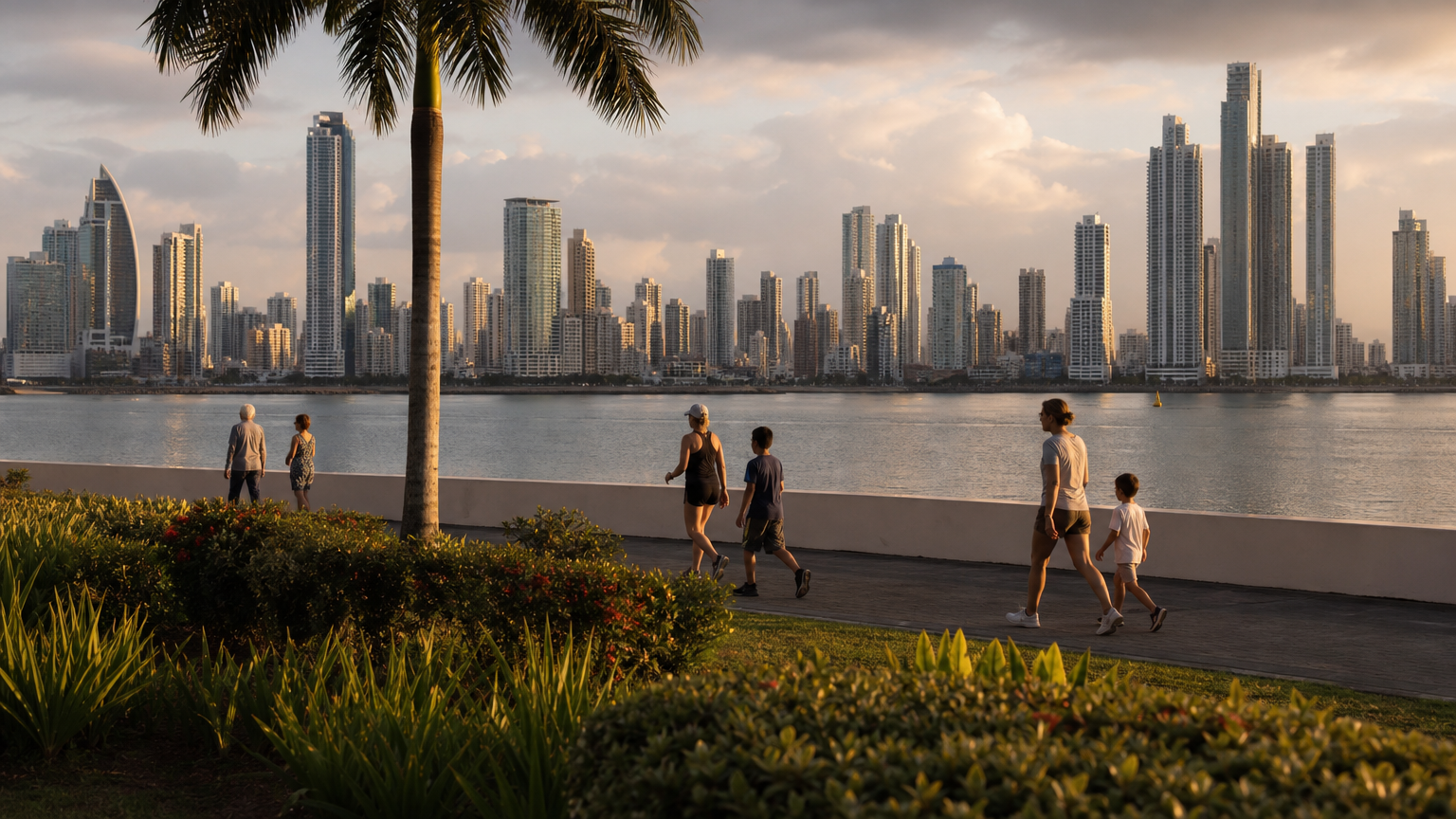
One of the more established real estate markets in the American continent that does allow real estate investments with positive cash flow at lower budgets is Panama City. Brand-new, ready-to-move-in units with North American build quality can be purchased inside the city at approximately USD $195,000 to USD $225,000 for a 1-bedroom, 1-bathroom unit, with full-time reception and front desk, rooftop pool, sun deck, full gym and sauna facilities, event room, and indoor parking.
These are all the amenities you have or wish you had in your existing condo or house in your current city. Similar condos can be anywhere from CAD $650,000 to $750,000 in downtown Toronto and Vancouver.
You may be wondering how somebody with $100,000 to $200,000 Canadian currency would afford a USD $195,000 to USD $225,000 apartment in Panama City. It is simple. We will cover the financing below.
If you are still stuck at the “Panama City” part and wondering why we are advising buyers to consider this overlooked real estate destination, you can check our latest article on this topic.
Can I Obtain Financing or a Mortgage to Buy Real Estate Overseas?
If you are a full-time resident in Canada, you know it is not easy to obtain mortgages from Canadian banks for real estate purchases, especially if you already have other financing and debt obligations, or own property for which you are paying installments. It would be very difficult with the same income you have now to qualify to purchase another property with an A lender, and sometimes even with B lenders.
In such a case, any realtor may offer you a pre-construction condo as a “viable” alternative to participate in the local real estate investment market with a limited budget. This basically means you can afford to pay CAD $100,000 to CAD $200,000 now and worry about it later since construction has not started, deferring your payment commitment to the future in the false hope that it might increase in price and you can sell it before closing date.
This may not be the best investment route, but some real estate investors have no other choice due to limited options with these budgets. But this is not the case. You actually do have a choice.
Local Panamanian banks can offer up to 50% mortgages. This means that if you have a $100,000 to $200,000 Canadian dollar budget, you can purchase a property with 50% financing if required.
The interest rate is definitely higher than Canada, but the whole point is that you do not need a mortgage value of $500,000 or higher to afford a property. When investing in Panama City, even as a non-resident, you can receive up to 50% financing as long as you have the full details of the real estate unit that you plan to purchase and can provide proof of funds for your deposit.
It is simple, and you do not have to go begging the banks or come up with your property tax statements, credit score, and endless paperwork. Even people with bad credit can purchase property in Panama if they have a 50% deposit.
How Can You Make Money From Investing in Pre-Construction Projects?
Another interesting fact to consider is that when a local real estate buyer invests in a pre-construction unit in Canada or the USA, they are hoping there will be an upside by the time the property is completed and closing time comes. They will have absolutely no positive cash flow or income from the deposit for the pre-construction project during the 3-4 years it typically takes to start and complete a high-rise condo project.
This means that if there is no serious price appreciation in that project after this period, they have lost up to 12-16% opportunity cost based on having a term deposit or GIC in the bank account to earn interest.
What some of the most reputed pre-construction developers are offering in Panama City, such as the Westin project, is a 4% per annum return ballooned until the project completes. This means that the buyer is guaranteed 4% per year on the unit they pre-purchase, with a completion date of approximately 3 years.
Basically, this offsets their cost and guarantees a return for them even if the property price does not appreciate, until the unit is completed and can drive positive cash flow and income for the investor based on renting out the unit. This is all handled by the in-house property management team of the developer through full turnkey services.
What Are the Costs of Maintaining and Holding Property Overseas vs. Canada?
You may already know the expenses and costs of holding ownership of a condo unit in Toronto or Vancouver. If not, here is a quick reminder:
- Annual property tax.
- Monthly condo maintenance fee.
- Utilities.
- Mortgage interest.
Currently, with new condo developments, because it is rare for somebody to be able to afford to pay $650,000 to $800,000 in cash, the mortgage interest rates will add up to the point that the investor in the condo unit will have zero positive cash flow, considering the rest of the expenses.
In Panama City, for a brand-new loft-style condo unit in the heart of Casco Viejo, the old city, with a size between 50-64 m² and a cost of approximately USD $195,000 to USD $200,000, the costs can look like this:
- Building maintenance fee: USD $148-$191 per month, based on approximately $2.95 per m².
- Utilities: Approximately USD $100 per month.
- Internet: Approximately USD $12 per month.
- Property tax: 2-3 years property tax exemption for this specific project in the old city.
- Typical property tax in Panama City: 0.5% to 1.2%, depending on value, district, location, and zoning.
- Mortgage interest, considering 50% LTV: Approximately USD $583.33 per month.
Now that we have covered the monthly expenses, the next big question is income.
What Is the Potential Income on a Property You Can Purchase With a Down Payment of $100,000 to $200,000?
Some key points to consider when calculating your ROI in Panama City include utilizing the short-term rental license that the developer has already been approved for by the city for the entire building. Airbnb and other similar short-term rental platforms are not restricted in Panama City and are very popular.
The buildings you would be investing in would all have short-term rental licenses and in-house property management services to handle the entire process for you. You do not lift a finger.
Here are the calculations based on having a CAD $150,000 deposit and obtaining a loan of USD $100,000 to afford one of the units in this specific project we have been covering in this article, located in Casco Viejo.
- Short-term rental income for this unit: USD $1,366 per month.
- Short-term rental turnkey service fee: USD $273.33 per month.
- Property tax for the first 3 years: $0.
- Insurance: USD $23 per month.
- Utilities: USD $100 per month.
- Internet: USD $12 per month.
- Mortgage interest: USD $583.33 per month.
- Net ROI: 2.3%.
Imagine what your ROI would have been if you did not have to borrow USD $100,000 at 7% interest. The above calculation would be impossible with Canadian condos, and you would have negative cash flow each month.
What Are the International Tax Implications If You Invest in Property Overseas?
In Canada, if you own specified foreign property with a total cost of more than $100,000 at any time in the year, you must file Form T1135, Foreign Income Verification Statement, to declare these overseas assets.
In terms of local taxation in Panama, it is a tax-free jurisdiction for any income, capital gain, or estate inheritance earned from outside the country. For local rental income sourced from inside Panama, all costs such as property management, insurance, depreciation, interest payments, and other related expenses can be deducted.
After deductions, the tax is 0% up to US$11,000 and 15% between US$11,001 and US$50,000. For example, for rental income of US$16,000 per year, after deducting all your expenses as listed above, the tax would be zero.
The property management company handling your property can assist and guide you on eligible expenses for tax purposes.
If you are considering investing overseas, certain countries have taxation treaties with Canada in order to avoid double taxation. Check Canada’s active tax treaties here: https://www.canada.ca/en/department-finance/programs/tax-policy/tax-treaties.html
How Easy Is It to Manage and Own a Property Outside Your Hometown?
First of all, it is important to understand the regulations in any foreign jurisdiction on whether it is legal for a foreigner to own freehold title of a property as a non-resident.
The good news is that in most countries, unlike Canada, this is 100% legal. Now let’s cover the actual property management aspects of owning a property in Panama City.
All the major developers in Panama City have in-house property management staff that charge anywhere from 10-20% of your gross rental income, depending on whether it is short-term Airbnb or long-term rentals. The developers already have short-term rental licenses from the municipality, for which there is no additional charge to the real estate buyer.
All rental income is in USD, since Panama’s economy is 100% based on the USD currency.
You can open a bank account remotely in Panama City without even stepping foot into the country. They will provide you a debit card to spend your money overseas.
The rent is collected on your behalf and deposited into your USD bank account by the property management company of the developer. You will have full online access to the account, and all expenses can be debited from the same account.
Wherever you plan to invest outside the country, make sure it is as easy as Panama City.
What Are the Steps to Purchase Property Overseas?
Here are the steps for a property purchase in Panama City. We will cover Dubai, Portugal, and Greece in future videos and articles on our site.
Step 1: Property Selection
- Select property or properties for investment.
Step 2: Reserve the Unit
- Client signs a reservation agreement.
- Client fills KYC / due diligence documentation from the developer.
- Client needs to pay a minimum of USD $5,000 for the reservation of 1 unit. Higher-value properties will require a higher deposit. Each unit will require its own deposit calculation. For example, investors who purchase 3 units at a time would typically deposit $15,000.
Step 3: Quotation, Case, and Compliance Check
From the client:
- Clear color scanned copy of the main applicant’s passport main page for all adults in the application for due diligence check, including main applicant, spouse, and any children over age 18.
- Security check and passport validation.
Step 4A: If the Unit Is Ready to Be Delivered
- After the developer’s KYC / DD stage, a purchase and sale agreement for the property unit or units is sent.
- Investor has 15 days to sign the purchase and sale agreement and make the full balance payment for the unit or units, plus legal closing fees.
- Client provides Power of Attorney for purchase of property. They can also choose to visit in person.
- Assuming full payments are received, the property is transferred to the client’s name through the Power of Attorney.
- The Power of Attorney format is provided.
- Transfer of property is completed.
- Title deed is issued in 45-60 days.
Step 4B: If the Unit Is Pre-Construction
- Client signs trust contract.
- Client pays fully to trustee account.
- Trustee provides letter confirming the deposit.
Step 5: Investment Certificate
An investment certificate, meaning proof of investment, is issued by the developer.
Step 6: Panama Processing
- Translations to Spanish will be completed in Panama for all documents. Only Panamanian certified translators are accepted for all government applications.
- In Panama, original title transfer of property documentation is signed by the local office based on the Power of Attorney provided by the investor.
- From the Public Register, the title deed will be taken showing the investor as the new owner.
- From ANATI, the current value of the property will be shown to the investor. This is the government property value registration portal where all developers need to register each unit.
What Are the Residency and Visa Pathways Through Real Estate Purchases?
If you are from the U.S., Canada, or any other friendly nation, and if you choose to invest a minimum of US$200,000 in any Panama real estate, whether residential, office, commercial, industrial, or land, you qualify for the residency program in Panama.
This means you, your spouse or common-law partner, children, and even parents can obtain residency in Panama, which does not require you to stay full time in Panama to maintain it.
You can also decide to deposit $200,000 in a Panamanian bank to lead to the same residency options. After 5 years, you can become eligible for citizenship. The residency requirement is 1 day every 2 years.
Your parents can also be included in such an application for residency without any nationality restrictions. This residency, immigration step, is optional, and it is not required to have residency in Panama to own property as a foreigner.
Here is the time frame and steps to obtain the Friendly Nations Visa in Panama:
1. Initial Visit
5 working days. As a result, the applicant can walk away with the provisional permanent residence card, provided all requirements are duly met.
2. Second Visit
2-3 days, after 2-3 months. As a result, the applicant can walk away with a provisional 2-year residence card.
3. Converting Temporary Residency to PR
After two years, applicants can apply for permanent residency.
4. Minimum Stay in Panama to Maintain Permanent Residence Status
It is not necessary to reside in Panama permanently. You only need to visit Panama once every two years to maintain residency status.
Why Panama Makes Sense for Priced-Out Real Estate Investors
If you have been priced out of real estate markets in cities like Toronto, Vancouver, or Miami, it is time to consider smarter, high-yield alternatives abroad. Panama City offers a rare opportunity to own income-generating, fully managed property in a stable, US-dollar-based economy, with investment thresholds as low as $100,000 to $200,000.
Whether you are a first-time investor or a seasoned real estate professional, the combination of financing options, low holding costs, and potential residency benefits make Panama one of the most accessible and rewarding global property markets today.
At INGWE, we specialize in helping clients like you navigate these international opportunities. From property sourcing to financing, legal processing, and immigration pathways, our team offers turnkey support every step of the way. Have more questions? You can schedule your consultation here to explore how your capital can go further overseas.
Unlock Global Residency Opportunities in 2025
If you are ready to put your Plan B into action, for yourself, your family, or perhaps your clients, you can reach out to us here. Join our online live stream every Thursday at 11am EST, or 8am PST, to share your feedback, post your questions, and engage with others who are also exploring these opportunities through our YouTube channel.
Ready to explore exciting residency programs across Central and North America, Europe, New Zealand, and the Caribbean Islands?
If you have any questions regarding this article or any other residency and citizenship topic, you can reach out to the author. To contact us, click here.