Best Expat Communities in Panama: An Honest 2026 Guide
The best expat communities in Panama are not chosen by name alone. They are chosen by how well a specific area matches a family’s own priorities: safety, schooling, connection with other expats, housing, and access to healthcare. Most people relocating to Panama have already settled the bigger questions, how to get a residency visa, how to move money into the country, and whether the economy is stable enough to build a life on. What remains is a more personal decision: which of Panama City’s neighborhoods, or which town outside it, actually fits everyday life. This guide walks through the five criteria that matter most when comparing Panama City neighborhoods, then profiles the specific communities where expats are actually settling in 2026.
At a glance
- Five criteria drive the decision: safety, schooling, connection with other expats, housing and real estate, and access to medical care.
- San Francisco, Punta Pacifica/Paitilla, Costa del Este, and Clayton are the four Panama City neighborhoods covered in depth here, alongside Boquete and Coronado outside the city for retirees.
- Costa Linda, Costa del Mar, and Santa Maria are the most secure, private gated communities in Panama City.
- International school tuition runs from about $15,000 to over $20,000 a year, and private health insurance runs $3,000 to $5,000 a year.
- Foreigners can hold freehold title to Panama real estate, with no extra taxes or restrictions as non-residents.
What This Guide Assumes You’ve Already Settled
Before comparing Panama City neighborhoods, it helps to note what this guide deliberately leaves out: the basics most expats have already worked through before they start comparing where to live.
On immigration, Panama’s Friendly Nations Visa and Qualified Investor Visa programs typically take one to three months from application to approval, depending on the program chosen, through Panama’s Servicio Nacional de Migración. The documentation required is comparatively simple.
On banking, Panama gives expats more flexibility moving liquid funds in and out of the country than most jurisdictions. More than 100 banks operate in Panama, within a banking system with a 124-year history of international and local operations.
On economic stability, Panama runs a dollarized, USD-denominated economy, which minimizes currency risk. The economy has grown almost continuously since 1999, aside from the 2020 to 2022 pandemic period that affected every country. Even during the 2008 to 2009 global financial crisis, Panama’s economy held up better than most, including the United States. The Panama Canal now generates roughly $11 billion to $12 billion a year for a country of about 4 million people, up from roughly $5 billion in earlier years.
The Best Expat Communities in Panama City
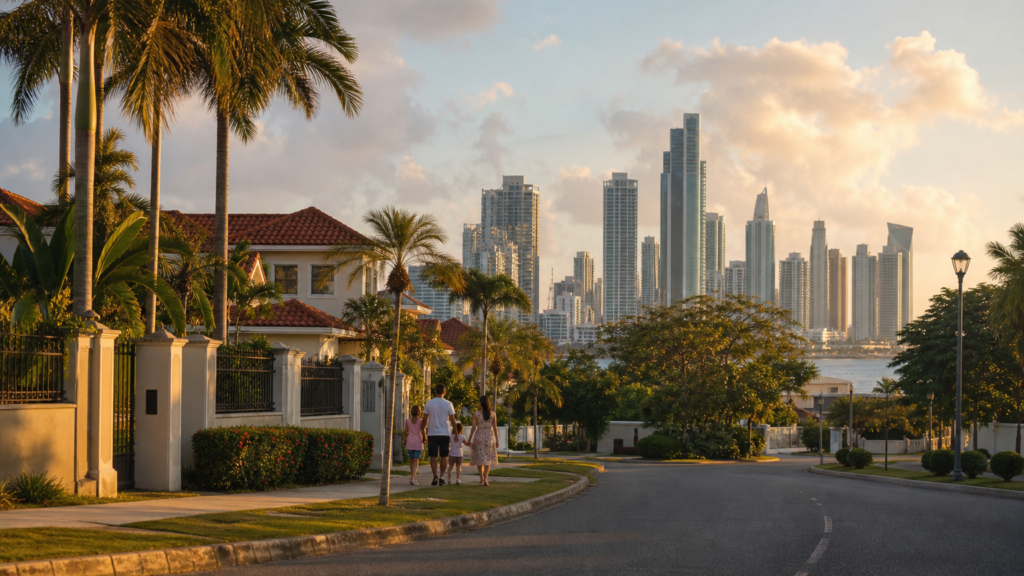
Panama City’s safest neighborhoods overall are Costa Linda, Costa del Mar, and Santa Maria. These are private, gated communities with extensive security, the kind of setup that lets children play outside the house or in a private clubhouse without close supervision. Not every expat wants that level of private security, or the extra driving it can mean to reach central Panama City. For expats weighing the full range of options, not just maximum security, these are the best expat communities in Panama City to consider first.
San Francisco: Panama City’s Hub for Young Professionals and Digital Nomads
San Francisco has been one of the most popular expat communities in Panama City for the past decade, particularly among digital nomads, short-term renters, and young professionals. It sits on a hill close to Omar Park, with many properties offering coastline views, and it is about 10 minutes by car from most of Panama City. It is walkable enough that a car is not required for daily life. Numerous new residential towers have been built here specifically for expats and investors, with both short-term and long-term rental options. San Francisco has traditionally been a young expat hub rather than a family-focused one, though it remains worth considering for anyone prioritizing location and walkability over space.
Punta Pacifica and Paitilla: High-Rise Living Near the Financial District
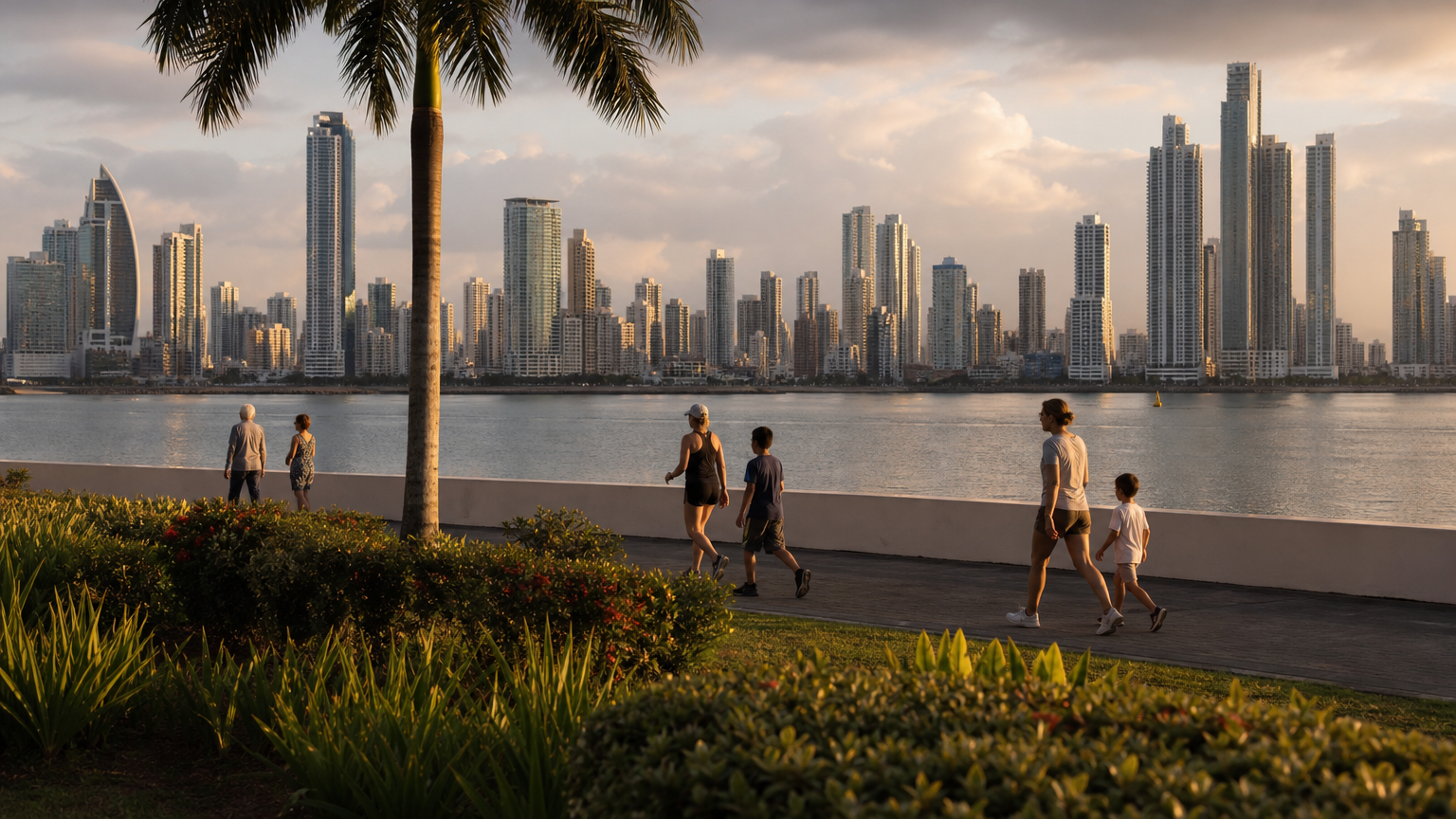
Punta Pacifica and Paitilla form a high-rise, higher-end part of Panama City, right next to the central financial district and steps from the marinas along the coastline. The community has a notably international, ethnically diverse population, with many kosher food options available. It is known for its luxury towers and a strong mix of retail and malls. For a prime ocean view from a high-end apartment, this neighborhood is the closest alternative to Ocean Reef, the man-made island connected to, and within walking distance of, Punta Pacifica and Paitilla.
Costa del Este: The Most International of Panama City’s Neighborhoods
Costa del Este has the most modern, newly built feel of any neighborhood in Panama City. It mixes residential and commercial space along the coastline, about 10 to 15 minutes from the international airport. The neighborhood has international schools, malls, restaurants, offices, and a genuinely walkable community, with a mix of older and newer residential buildings. Costa del Este has one of the highest concentrations of expats living in Panama City, skewing toward active, city-centered residents rather than retirees. It works well for families, pet owners, and professionals alike, sitting about 7 to 8 minutes from Santa Maria, 15 minutes from the international airport, and 15 minutes from the downtown financial district. Within Costa del Este sits Costa del Mar, a private, exclusive gated community with a limited number of residential buildings available only to its own residents, built for family life with extra privacy and security.
Costa del Este has an unusual origin. Twenty-five years ago, the Motta family purchased what was then an official landfill for Panama City’s waste. They invested in infrastructure, developed the land, and sold plots to developers. Today, Costa del Este is one of the most modern, luxury, and safest communities in Panama City.
Clayton: Quiet, Family-Oriented Living Near Balboa Academy
Clayton grew up around the former Clayton USA military base, which was converted into the City of Knowledge. It sits near the embassy area, which has drawn a large expat community to the neighborhood over time. Clayton is calm, quiet, and safe, and it is minutes from Balboa Academy, the US-curriculum private international school. It is roughly 20 to 25 minutes by car from the center of town, and it remains one of the more popular choices for expat families.
Boquete and Coronado: Retiree Communities Outside Panama City
Boquete and Coronado sit outside Panama City and are popular with expats, though they function primarily as retiree communities rather than the family- and professional-focused neighborhoods covered above. Boquete is in the mountains, with a cooler climate and some international school options. Coronado sits along the coast. Neither is covered in depth here, since this guide focuses on Panama City itself, but both are worth knowing about when weighing where in Panama to settle.
Side by Side: Comparing Panama City’s Main Expat Neighborhoods
The table below summarizes the four Panama City neighborhoods covered in depth, side by side:
| Neighborhood | Best For | Distance | Walkability | Notable For |
|---|---|---|---|---|
| San Francisco | Young professionals, digital nomads | ~10 min to most of Panama City | Very walkable, no car needed | Coastline-view towers near Omar Park |
| Punta Pacifica / Paitilla | High-end ocean-view living | Adjacent to the financial district | Walkable to marinas and malls | Luxury towers, near Ocean Reef |
| Costa del Este | Families, professionals, pet owners | 15 min to airport and downtown | Highly walkable | Highest concentration of expats; gated Costa del Mar enclave |
| Clayton | Families wanting quiet and privacy | 20-25 min to downtown | Car recommended | Minutes from Balboa Academy |
Schooling Options for Expat Children in Panama
Panama and Panama City offer a range of international private school options. The most popular are Balboa Academy, which follows a US curriculum and starts at about $15,000 a year, along with Metropolitan International School, the International School of Panama, and King’s College, where tuition runs above $20,000 a year. Many of these larger private schools have been relocating their campuses to the outskirts of Panama City due to space constraints at their original sites, and they offer bus service across most of the city. Wherever a family lives in Panama City, children can access these schools through a daily bus pickup and drop-off service. Where a family chooses to live mainly affects how long that bus ride runs.
Admissions run year-round. The only formal requirement is submitting a child’s educational transcripts from their home country for approval by Panama’s local ministry of education, a process that typically takes 30 to 45 days. Children can start attending school while that approval is still in progress. These campuses tend to be well equipped, with outdoor swimming pools, multiple gyms, robotics classes, STEM programs, and sports and arts facilities.
Connecting With Other Expats in Panama City
Socializing and connecting with other expat families matters for anyone settling into a new country, especially for those who do not speak Spanish. Among the neighborhoods covered here, Santa Maria, Costa del Este, and Clayton are the most international, where English speakers can generally handle daily routines without needing Spanish. That said, expat communities are growing across all major parts of Panama City, not just these three.
Housing and Real Estate Options for Expats
Every community covered in this guide has solid real estate options for expats. Panama makes investing straightforward: foreigners can hold freehold title with no restrictions and no extra taxes as non-residents or non-citizens. Most of Panama City consists of newer high-rise residential developments, while low-rise options such as townhouses and single-family homes concentrate in Santa Maria, Panama Pacifico, Clayton, Costa Linda, and the gated villa community within Costa del Este. Many families prefer a backyard or a gated community, giving children and pets space to play without the security or traffic concerns of a busy street.
Larger apartments in high-rises are also built for families, typically with 24/7 security and amenities such as children’s playgrounds, pet areas, swimming pools, and co-working space. Smaller apartments, more common in San Francisco and Bella Vista, tend to suit younger single professionals. Buying directly from developers with move-in-ready or rental-ready units can be difficult, since most projects sell on a pre-construction basis. Accessing ready-to-move-in or ready-to-rent inventory generally takes local knowledge and the right network. INGWE Global Investment & Mobility works across global real estate, residency, and citizenship, and helps expats reach that inventory directly.
Access to Healthcare for Expats in Panama
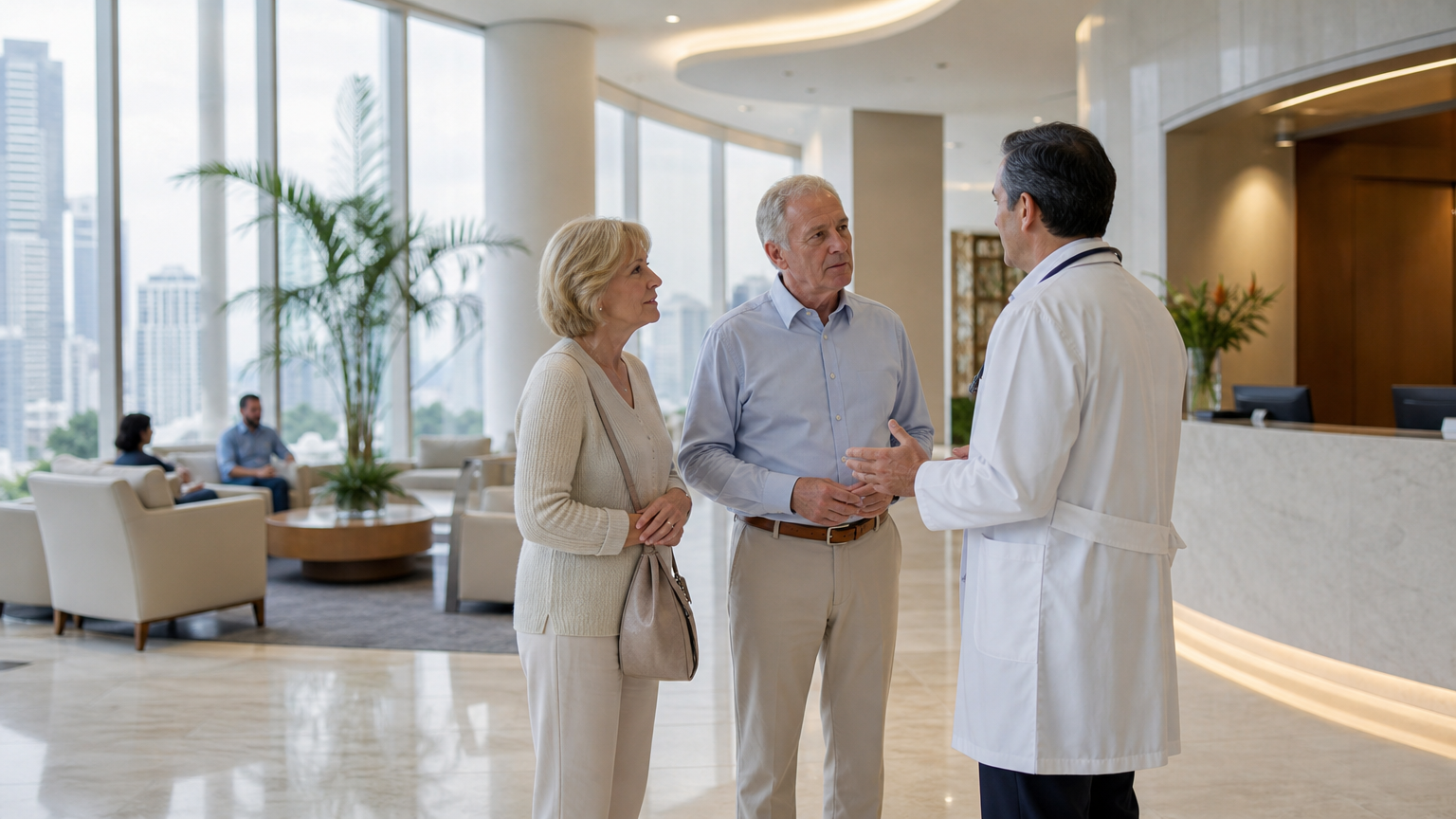
Panama’s medical system for expats runs on a private, pay-per-service model, similar in structure to the US healthcare system but at roughly a quarter of the price. The highest level of health insurance available in the country runs from about $3,000 to $5,000 a year, depending on age, health, and family size, competitive with strong healthcare options anywhere in the world.
Medical tourism is also growing in Panama. Major private hospitals include Pacifica Salud, affiliated with Johns Hopkins Medicine, along with Hospital Paitilla and Clinica Hospital San Fernando. Anyone living in Panama City or in the neighborhoods covered here is no more than about a 15-minute drive from one of these major private hospitals, and smaller private family and medical clinics are spread across every neighborhood in the city.
Choosing where to live in Panama is a more personal decision than choosing whether to move here at all. I made that move myself, and the neighborhood that worked for my family was the one that matched our own priorities: safety, schools, community, housing, and healthcare, not the address everyone else was talking about.
Reza Motalebpour, INGWE Global Investment & Mobility
Our Professional View: Matching the Right Panama City Neighborhood to Your Priorities
No single neighborhood is the best expat community in Panama for everyone. The right one depends on which of the five criteria matters most to a given household. Young professionals and digital nomads who want walkability and a short commute tend to do best in San Francisco. Buyers who want a prime ocean view and proximity to the financial district usually gravitate to Punta Pacifica or Paitilla. Families who want the broadest mix of international schools, walkability, and one of the highest concentrations of fellow expats tend to choose Costa del Este. Families who prioritize quiet, privacy, and easy access to Balboa Academy tend to choose Clayton. Retirees drawn to a cooler climate or a slower coastal pace look toward Boquete or Coronado instead of the city itself. Matching the criteria to the household, rather than picking a name off a list, is what determines whether a move to Panama works long term.
Frequently Asked Questions
What is the safest neighborhood in Panama City for expats?
Costa Linda, Costa del Mar, and Santa Maria are the safest neighborhoods in Panama City for expats, since all three are private, gated communities with extensive security. That level of security typically means children can play outside the house or in a private clubhouse without close supervision, though not every expat wants the extra driving that comes with living outside the main city.
Which Panama City neighborhood is best for families with children?
Costa del Este and Clayton are generally the best Panama City neighborhoods for families with children. Costa del Este offers international schools, walkability, and a gated villa enclave called Costa del Mar, while Clayton offers a quiet, calm setting minutes from Balboa Academy.
How much does international school tuition cost in Panama City?
International school tuition in Panama City generally starts around $15,000 a year at Balboa Academy and runs above $20,000 a year at schools such as King’s College. Metropolitan International School and the International School of Panama also fall within this range, and most offer citywide bus service.
Do expats need a car to live in Panama City?
Not in every neighborhood. San Francisco, for example, is walkable enough that residents do not need a car for daily life, while neighborhoods further from the center, such as Clayton, typically require one.
How much does health insurance cost for expats in Panama?
The highest level of health insurance available to expats in Panama runs from about $3,000 to $5,000 a year, depending on age, health, and family size. Panama’s private, pay-per-service medical system is similar in structure to the US system but costs roughly a quarter as much.
Can foreigners own property outright in Panama?
Yes, foreigners can hold freehold title to Panama real estate, with no restrictions and no extra taxes as a non-resident or non-citizen. Most of the neighborhoods covered in this guide offer both high-rise and low-rise ownership options.
What visa options let expats move to Panama quickly?
Panama’s Friendly Nations Visa and Qualified Investor Visa programs typically take one to three months from application to approval, depending on which program is chosen. Both require a comparatively simple set of documents compared with many other countries’ residency programs.
Connect With INGWE Global Investment & Mobility
Choosing the best expat community in Panama is easier with local, on-the-ground guidance, especially when it comes to reaching ready-to-move-in or rental-ready inventory that is not always visible from outside the market. INGWE Global Investment & Mobility works across global real estate, residency, and citizenship, and can help match a Panama neighborhood, and a residency pathway, to your family’s specific priorities. Book a private consultation to start the conversation.
Disclaimer: This article is intended for informational purposes only and does not constitute legal, tax, financial, or immigration advice. Neighborhood characteristics, school tuition figures, healthcare costs, visa processing timelines, and economic figures referenced for Panama are subject to change and should be independently verified at the time of any decision. Individual circumstances vary, and residency, real estate, and immigration matters should be reviewed with qualified professionals licensed in the relevant jurisdiction before proceeding.